
Does Apoquel Actually Work for Dog Allergies? My Allergy Protocol.
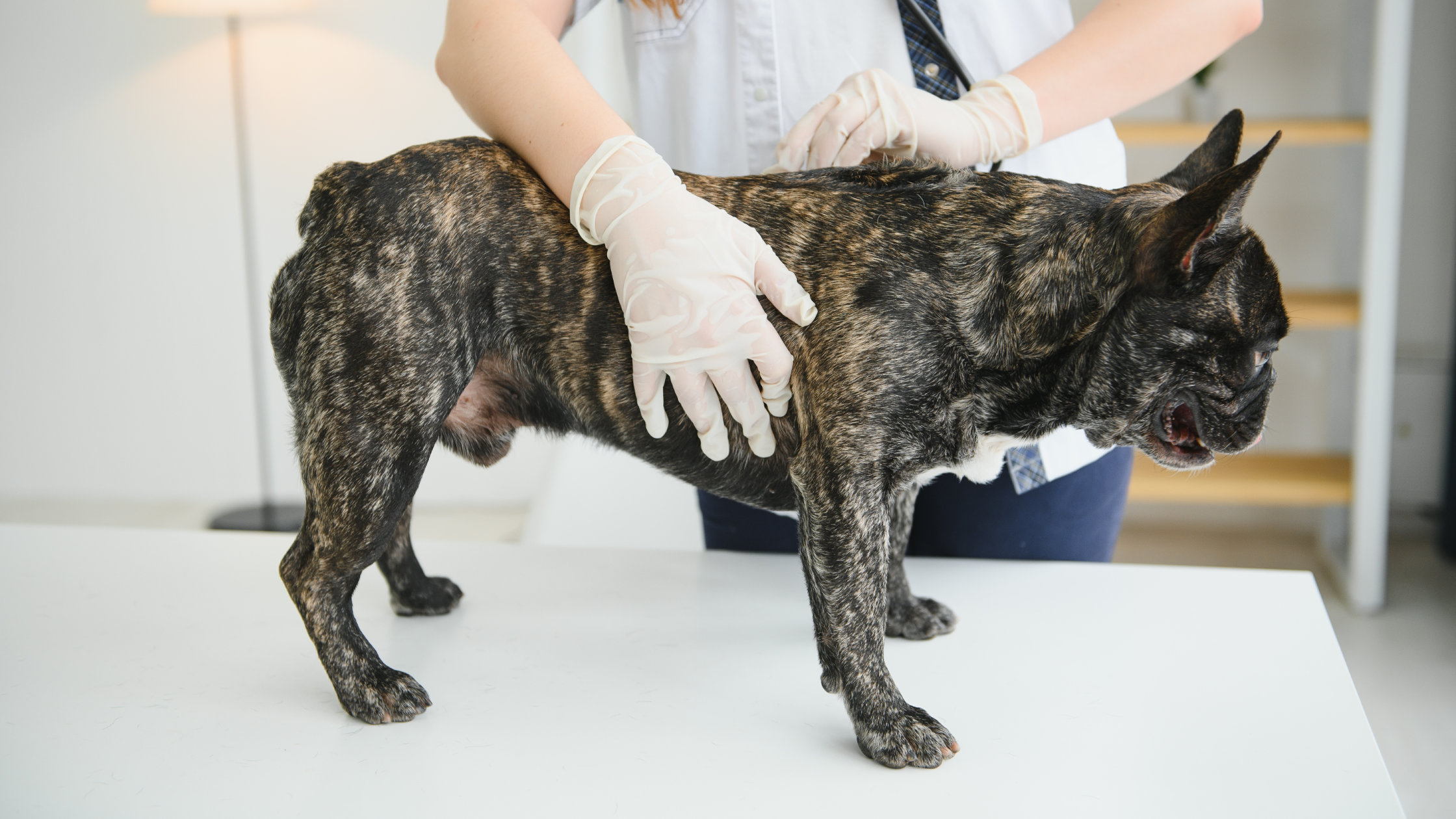
Apoquel is a widely prescribed allergy medication offered for a myriad of skin and allergy disorders. Many dogs must keep taking the medication to reap the benefits, and are wrongly advised that there’s nothing else that can be done without the veterinarian taking into consideration lifestyle and dietary changes.
It’s important to first understand how Apoquel is intended to work, in case you have not been previously explained, and then what your full range of options are to best serve your dog.
How does Apoquel work?
Apoquel is a veterinarian-prescribed medication designed to combat the symptoms associated with allergies in dogs, such as excessive itching and licking, redness and dermatitis.
If your dog has presented with any symptoms of allergies, there is a good chance Apoquel will be recommended. While I do agree that it works quickly to stop the itching and licking for most dogs, it is not a cure. And I think that’s important to be aware of, as it’s often prescribed for long-term use without any recommendations or troubleshooting offered to get to the root cause.
Finding the root cause of an allergy is incredibly difficult, but it is crucial if you want to provide your dog with a happy and healthy life.
We can easily put allergies in the too-hard basket, or we can run through a common list of causes and eliminate or minimise our dog’s exposure. Often, THIS method fixes a canine allergy, despite not knowing exactly what the cause was. At the end of the day, it doesn’t matter what the cause was, as long as the allergy has subsided.
Apoquel works by blocking certain immunological pathways that would tell your dog they are itchy. While that sounds like a good thing, and as I’ve said, it does seem very good at doing so, as with most medications, there is a trade-off.
Long-term use of immunosuppressive medications (which is what Apoquel does) can cause an increase in all forms of infection, bacterial, fungal and parasitic, and lead to an increased need for other medications.
This is the situation I was in with my dog. His Apoquel need kept creeping up, with recurring chronic ear infections as well.
Environmental Options
This might be the part where I lose some of you, but I promise it’s worth trying. I’ve had a lot of luck making environmental adjustments. I can’t count how often a simple shampoo swap has improved a dog’s skin condition, or how changing laundry liquids and washing frequency has helped with teary eyes and sneezing.
Unfortunately, we’re often told that there’s nothing in the environment that we can change. This may be true when it comes to the outside world, but we can definitely control our household and where we choose to take our dogs outside of the house.
Inside the home, consider using low-toxic or non-toxic cleaning products, avoid burning candles and spraying air fresheners, and opt for high-quality grooming products (look for those with ingredient labels that you can decipher). Switch to natural fibre bedding, blankets, collars and leads so your dog isn’t coming into contact with potentially chemical-laden synthetic fabrics.
I personally had already started looking into these options for my own benefit, and just extended the process to help my dog.
*Did you know our online store is full of Lydia Approved safe products?
Dietary Options
We know every animal on the planet eats fresh food, and when there is abundance and variety, wildlife thrives. We, ourselves, are recommended to eat lots of fresh foods, “eat the rainbow”, they say.
Somewhere along the way (I won’t get into any details on this subject), this message was lost in the pet world, with many professionals being taught that highly processed, formulated foods are what our pets need. From mice and rabbits right up to dogs, cats and horses.
A fresh food diet provides your dog with an abundant supply of nutrients, vitamins and digestive enzymes that are not present (or not in a plentiful supply) in dry and cooked dog foods.
One of the most significant ways to impact your dog’s allergies is from the inside out, as the immune system’s reaction is essentially causing the allergy symptoms. They say 70-80% of the immune system is actually in the gut – another reason to support the digestive system.
Final Recommendations
While this is certainly not Veterinary advice, and should not be taken as such, this is my personal recommendation for helping dogs who are (often) unnecessarily suffering with allergies.
Finding the root cause is difficult and takes a lot of observational skills, as well as a clear ability to control your dog’s environment and anything they ingest. Definitely not an easy procedure.
In my own personal experience using Apoquel for my dog, I was given the impression that figuring out the root cause was impossible, and it would be better to alleviate my dog’s symptoms as best as we could via medication (Apoquel). I had never thought that I could do anything further to help my dog, and there was no other advice given.
Over 2 years had gone by, and my dog’s symptoms were (knowing what I know now) only marginally better, and he would often have bursts of ear infections and excessive itching. A very miserable life for any animal.
The solution offered was to raise the dose and try some of the other allergy medications on offer.
Once I learned that there were many environmental and dietary factors that I COULD control, I controlled the 💩out of everything I could.
I switched my dog to a whole food diet and regularly washed all bedding and bowls in low-tox and/or natural cleaners. We use no air fresheners or candles and no chemicals in our garden. I even switched his collars and leads to those made of natural fibres.
As someone who was already making these health switches for their own benefit, I only extended this to my dog.
In 3 months of making these changes, my dog’s condition started to improve. I had reduced the Apoquel slowly over 2 weeks. And within 2 years, his allergies were completely gone.
I’m not saying this method will work for everyone, and your dog will be completely cured like my dog. My goal is to show you that there are alternative and supplementary options to using allergy medications that may just end up being a cure for your dog.
Since these methods cause no harm, they’re worth trying.
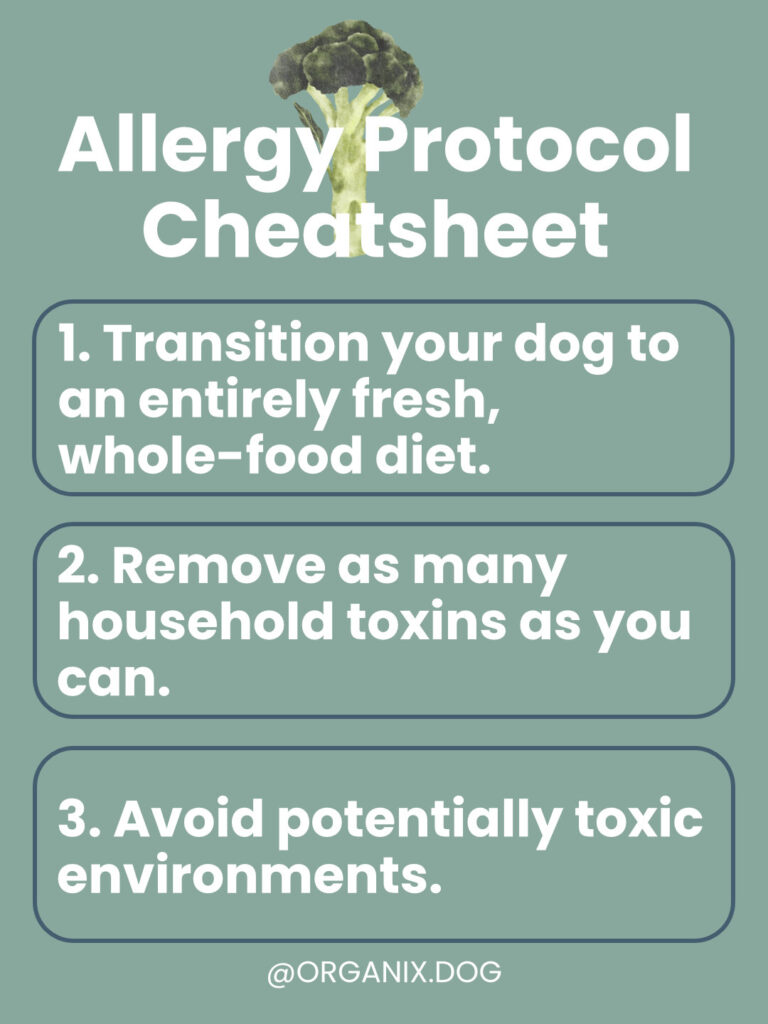
- Transition your dog to an entirely fresh, whole food diet.
- No canned or rolled mush.
- No air-dried, lightly dried, sometimes dried, sorta dry, half steamed, a tad boiled, etc, only FRESH, WHOLE FOODS.
- Include meaty bones and leafy greens.
- Contact a nutritionist if you’re unsure, so you start off on the right track.
- Remove as many household toxins as you can.
- Synthetic dog bedding, collars, leads, and blankets.
- Air-fresheners, candles, cleaning products, laundry and dishwashing detergents.
- Plants that are toxic to dogs.
- Dog shampoo and grooming products with no ingredient labels.
- Avoid potentially toxic environments.
- Keep away from council poison spray zones.
- Don’t allow your dog into the garage where car and garden products are stored.
- Avoid using pesticides and herbicides in your garden.
By making some pretty simple household and environmental adjustments, many dog owners have been able to reduce or completely stop any allergy medications their dogs are taking. The changes are not groundbreaking or even expensive; in fact, I would argue that they will create a healthier dog that will save you money in the long run.
Start small by focusing on one area of your dog’s life, make changes, and seek help from relevant professionals as needed.
Unsure what suits your dog?
Book a consultation and we’ll build a plan around your dog’s individual needs.
Keep reading

Dog Food Debate: Raw vs. Cooked – Which is Actually Healthier?
Cooked, uncooked, meat, plants, fruits, grain-free, single protein, kibble, canned, fresh, whole-prey, freeze-dried and more. There has never been a…

What Size Bones Should my Dog Eat?
The first time I fed my dog a bone I had no idea what I was doing. I didn’t know…

Does Your Dog Really Need Supplements? Start Here First
Is your dog’s food actually nourishing them, or are they just surviving? Many dog owners worry about whether their dogs…